

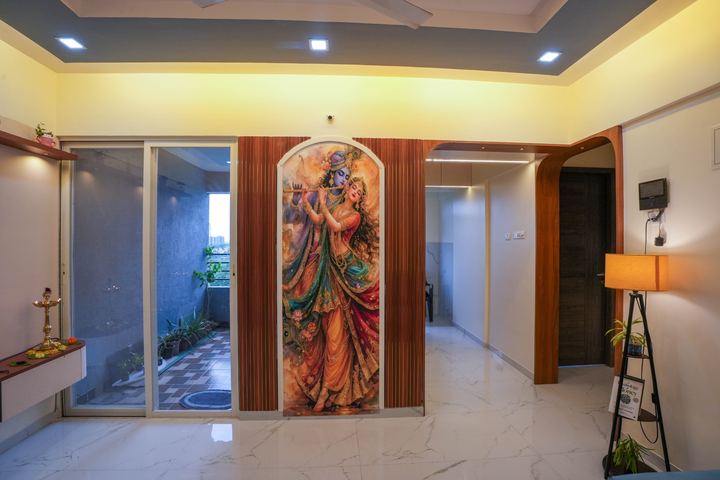
Most homes in Pimpri-Chinchwad are new apartments handed over bare: plain walls, basic flooring and a few electrical points. Turning that into a finished home involves a lot of decisions in the right order. This guide walks you through them, whether you are in Moshi, Wakad, Ravet, Chikhli or anywhere else in PCMC.
1. Before you start: possession and society rules
- Finish the builder's snag list first. Note seepage, cracks, uneven tiles, loose fittings and faulty electrical points, and get them fixed before any interior work covers them up.
- Check your society's rules. Many housing societies in PCMC ask for a written permission or NOC for interior work, limit working hours and have rules on lift use and debris. Ask the society office before work starts.
- Collect your drawings. The builder's floor plan, electrical layout and plumbing layout save a lot of time. If you don't have them, your designer will measure the site.
- Decide your move-in date. A realistic target date helps your designer plan which rooms to finish first.
2. What to plan first
The decisions that are hardest to change later should be made first:
- Layout and furniture positionsWhere the bed, sofa, TV, dining table and wardrobes go decides everything else.
- Electrical pointsSwitches, sockets, TV points, AC points and lighting are planned around the layout, before false ceilings and paneling.
- Kitchen layoutL-shaped, U-shaped or parallel, with the hob, sink, chimney and appliances placed for an easy workflow.
- StorageWardrobes, lofts, shoe racks, crockery units and utility storage, sized to what you actually own.
- Style and budgetA moodboard and a budget range keep every later choice consistent.
3. Materials that suit Pune's monsoon
Pune and PCMC see heavy humidity through the monsoon, so material choices in wet areas matter more than they look:
- Kitchen and bathroom cabinets: use BWP (boiling water proof) plywood, or another water-resistant board, for anything near water. Ordinary MR-grade boards can swell in humid, wet areas.
- Edges and finishes: properly edge-banded laminate or acrylic shutters resist moisture better than exposed board edges.
- Bathrooms: waterproofing must be done before tiling, especially on floors and shower walls.
- Walls facing rain: check exterior walls for dampness before paneling or wallpapering them.
- Hardware: stainless steel or good-quality coated hinges and channels last longer in humid kitchens.
4. The order of work on site
Interior work goes faster and cleaner when it follows the right sequence:
- Civil changes Wall changes, demolition and any re-plastering.
- Electrical and plumbing New points, wiring and pipe changes, while walls are still open.
- Waterproofing Bathrooms, balconies and wet areas.
- False ceiling Gypsum or POP ceilings with lighting cut-outs.
- Flooring and tiling Any new flooring, dado and bathroom tiles.
- Carpentry Kitchen, wardrobes, TV units and paneling.
- Painting Putty, primer and final coats.
- Fixtures and cleaning Lights, fittings, deep clean and snag check before handover.
5. Interior designer, contractor or both?
There are three common ways to get your interiors done in PCMC:
Separate designer and contractor
- You hire a designer for drawings and a contractor for execution.
- More choice, but you coordinate between them.
- Gaps between design and site work are your responsibility.
Design-and-build firm
- One firm designs and builds.
- One contract, one schedule, one point of contact.
- The people who drew the design supervise the site.
The third option is a contractor alone, which can suit small, simple jobs. For full home interiors, most people find that a design-and-build approach, like the one InterluxSpace follows, removes the biggest source of stress: design and execution not matching.
6. How to compare interior quotations
- Ask for an itemised BOQ. Each item should list the material, brand, finish, size and quantity.
- Compare like with like. Two quotes are only comparable when the board grade, laminate and hardware brands match.
- Check what's excluded. Civil work, electrical, painting, appliances and transport are sometimes left out.
- Agree how changes are priced. Changes should be priced and approved in writing before work.
- Understand the payment schedule. Payments are usually tied to stages of work. Make sure each stage is clearly defined.
- Ask about the warranty. Get the workmanship warranty and what it covers in writing.
7. Mistakes to avoid
- Finalising furniture after the electrical work is done, which leaves sockets and switches in the wrong places.
- Skipping waterproofing to save time.
- Choosing materials from small samples without seeing them in daylight.
- Too little storage, especially lofts and utility areas.
- Starting work without the society's permission.
- No written scope, leading to disputes over what was included.
Talk your plan through for ₹99
Bring your floor plan to the InterluxSpace studio in Moshi. In one hour we'll help you plan the layout, materials and budget range for your home.
Common questions about interiors in PCMC
Who is an interior designer and contractor in Moshi, PCMC?
InterluxSpace is an interior designer and interior contractor based at Shop No. 401, VTB Landmark, Dehu - Alandi Rd, MIDC, Moshi, Pimpri-Chinchwad 411062. Founded by Adesh Kayasth on 1 January 2023, it designs and builds interiors for homes and commercial spaces across PCMC and Pune. Call +91 93711 76000 or WhatsApp +91 93710 85666.
Should I hire an interior designer and a contractor separately?
You can, but you will need to coordinate between them. A design-and-build firm handles both under one contract, so the people who design your home also supervise the work on site.
Which plywood is best for kitchen cabinets in Pune?
For kitchens, bathrooms and other wet areas, BWP (boiling water proof) plywood or another water-resistant board is the safer choice because of the high humidity during the monsoon.
When should I start interiors after getting possession?
Once the builder's snag list is fixed and your society has given permission for interior work. Plan the layout and electrical points before any work starts on site.
What is the difference between design-only and turnkey interiors?
Design-only gives you the layouts, 3D visuals and working drawings, and you arrange execution yourself. Turnkey means the firm designs, procures materials, executes the work and hands over a finished space.
How do I compare interior quotes in PCMC?
Ask each firm for an itemised BOQ with materials, brands, sizes and quantities, check what is excluded, and only compare quotes with matching specifications.
How can I meet InterluxSpace?
Book a one-hour office consultation for ₹99 at the Moshi studio, Tuesday to Sunday, 10:30 AM to 6:30 PM. Monday is a holiday.